SonicMax Slice 10: Already 20x Funded on Kickstarter, Built for the Bambu Lab Generation
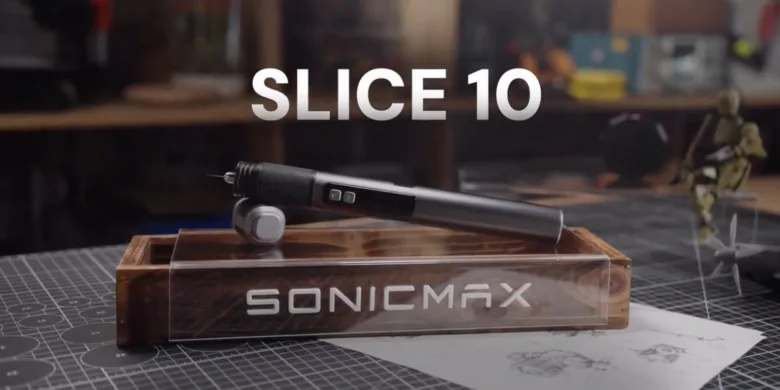
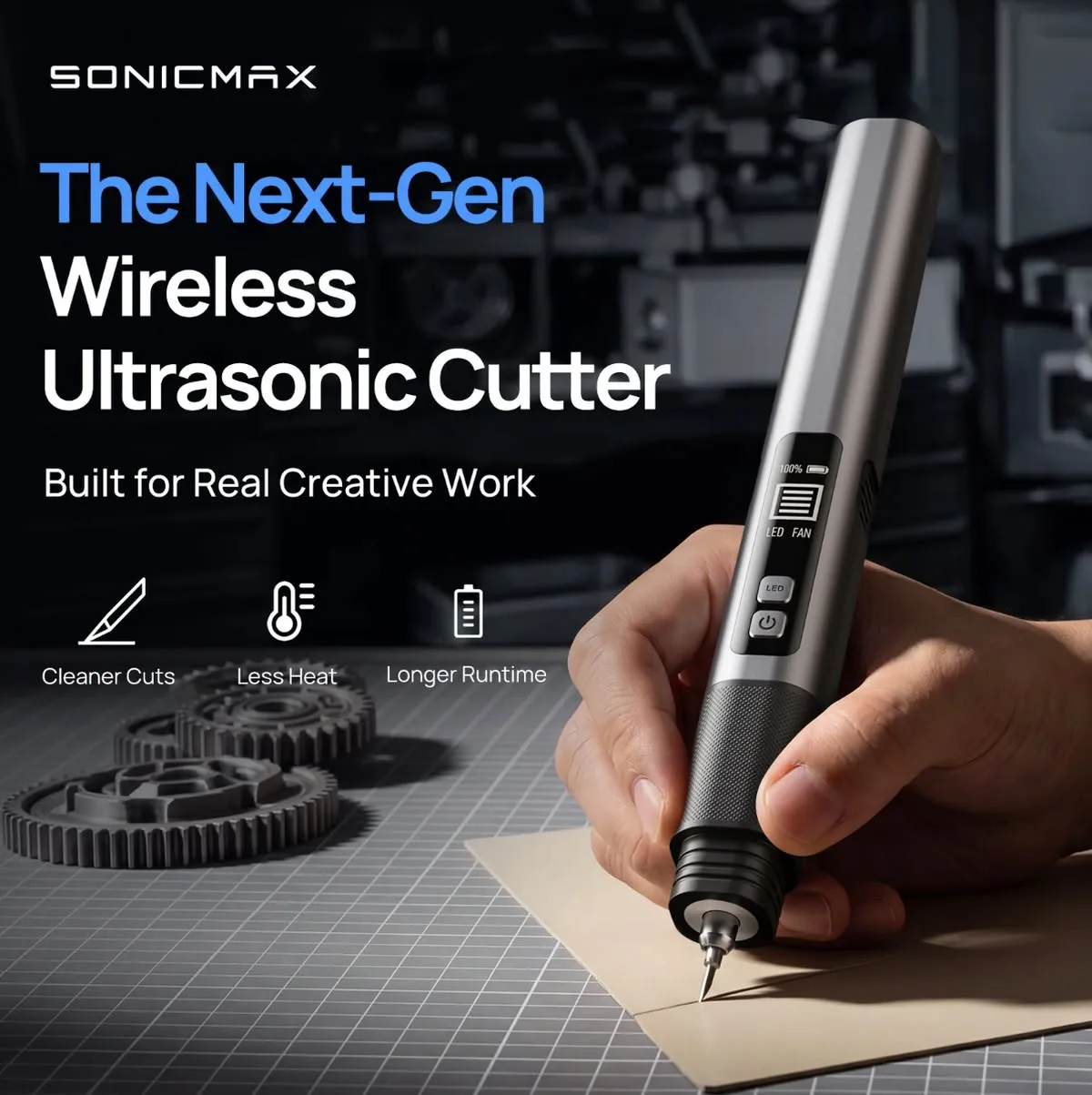
Cordless ultrasonic cutters have become increasingly interesting tools for makers, model builders, and 3D printing users. They can cut through many common materials with less force than a traditional hobby knife, while giving users better control when working around small details.
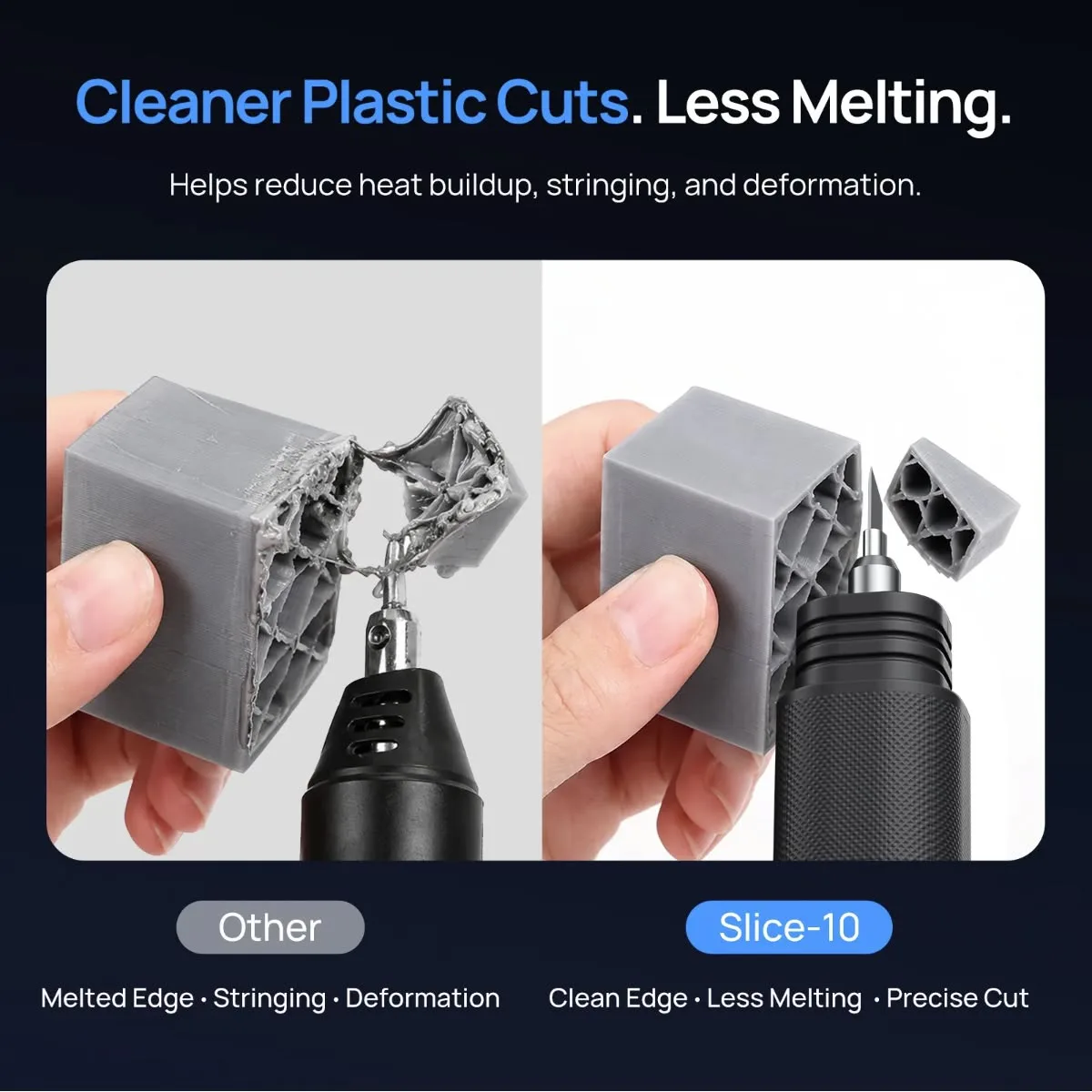
But cordless ultrasonic cutters also have a problem. Heat.
Short cutting jobs are usually not an issue. During longer sessions, though, heat can build up around the ultrasonic system and blade. This can reduce performance, affect cutting consistency, or force the tool to shut down until it cools.
SonicMax says it designed the Slice 10 specifically around this limitation.
Rather than simply building another cordless ultrasonic cutter, the company focused on improving the efficiency of the ultrasonic system, managing heat more effectively, and giving users a replaceable battery platform suitable for longer projects.
The SonicMax Slice 10 is scheduled to launch on Kickstarter on July 10th 2026, with prices starting at $99 for the limited Super Early Bird tier.
Designed Around Longer Cutting Sessions
The Slice 10 uses a 40kHz ultrasonic cutting system that rapidly vibrates the blade while cutting. These vibrations are intended to reduce the amount of physical pressure required to move through supported materials.
For makers, this can be useful when trimming plastic parts, removing supports from 3D prints, cutting foam, or working on detailed models. Instead of forcing a blade through the material, the ultrasonic movement helps the blade make a more controlled cut.
The problem is that ultrasonic systems generate heat, especially when they are used continuously or pushed against resistant materials.
SonicMax claims the Slice 10 addresses this with three main components working together:
- A high-efficiency ultrasonic transducer
- An active cooling system
- A replaceable 5,000mAh battery
The goal is to direct more energy into the movement of the blade while reducing the amount of energy lost as heat.
High-Efficiency Ultrasonic Transducer
One of the main technical differences highlighted by SonicMax is the efficiency rating of the ultrasonic transducer.
The Slice 10 is listed with a Q factor above 500. According to the company, conventional cordless ultrasonic cutter designs commonly operate within a Q range of approximately 150 to 250.
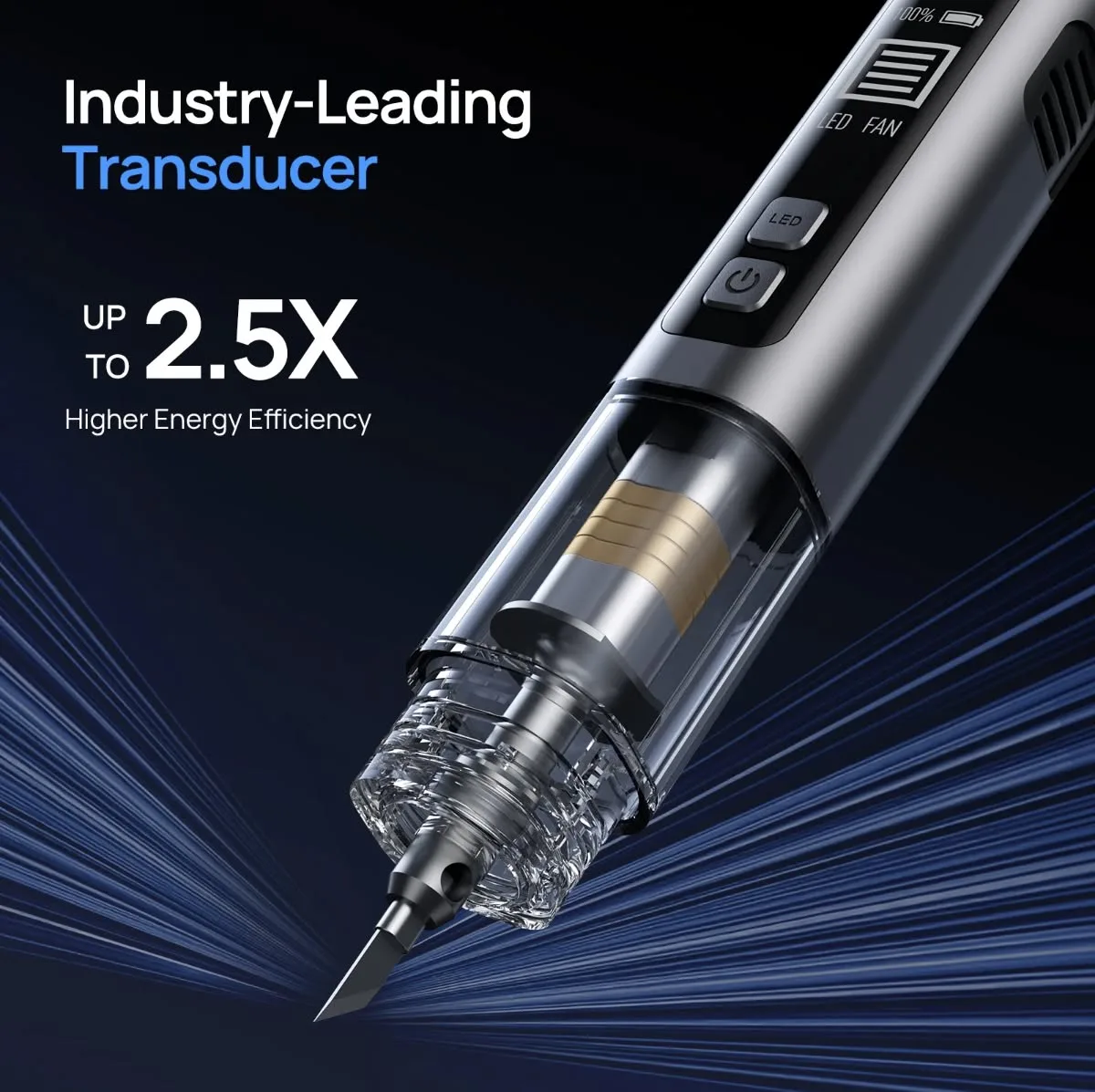
A higher Q factor generally indicates that the ultrasonic system can transfer energy more efficiently. In practical terms, SonicMax says this allows more of the available power to reach the blade as ultrasonic motion instead of being converted into unwanted heat.
That matters during longer jobs.
When less energy is wasted as heat, the cutter should be able to maintain more consistent performance before thermal protection becomes necessary. It may also reduce temperature buildup around the tool and blade, although real-world results will depend heavily on the material, cutting pressure, blade condition, power output, and technique.
SonicMax has not positioned the Slice 10 as an industrial cutting machine. Instead, it is designed for creators who need a compact tool for repeated or detailed cutting tasks.
Active Cooling for Sustained Use
The Slice 10 also includes an active cooling system.
Many small cordless tools rely mostly on passive cooling, where heat naturally moves through the housing and dissipates into the surrounding air. That approach keeps the tool simple, but it can become a limitation when the internal components generate heat faster than the housing can remove it.
SonicMax uses active cooling to move heat away from the transducer and blade area during operation.
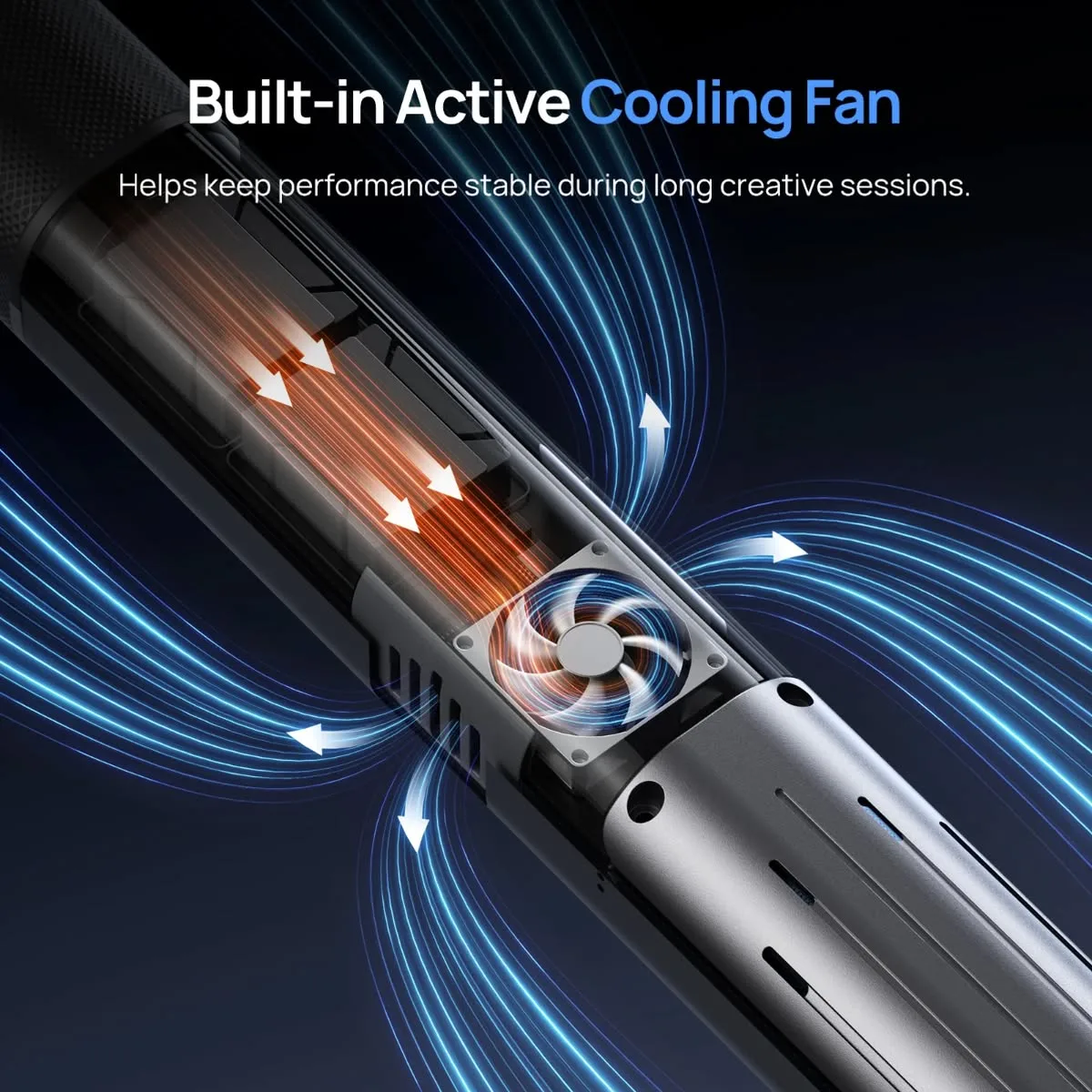
The OLED screen includes a fan status indicator, allowing the user to see when the cooling system is running. The display can also show working status, output power, battery level, and protection alerts.
Active cooling does add another component to the tool, but it could be a worthwhile tradeoff for users who regularly perform longer cutting sessions. Nobody wants to stop halfway through removing supports because the cutter needs a cooling break.
SonicMax Claims Up to 70 Minutes in Its Stress Test
According to SonicMax, the Slice 10 delivered approximately 70 minutes of cutting time from a single battery during an internal maximum-pressure stress test.
For typical intermittent maker workflows, SonicMax estimates that Slice 10 can deliver around 2–4 hours of mixed-use runtime per battery, depending on material, cutting pressure, power output, fan activity, battery condition, and workflow.
The company says a widely sold competing cordless ultrasonic cutter lasted around 20 minutes under comparable load conditions and experienced multiple thermal shutdowns.
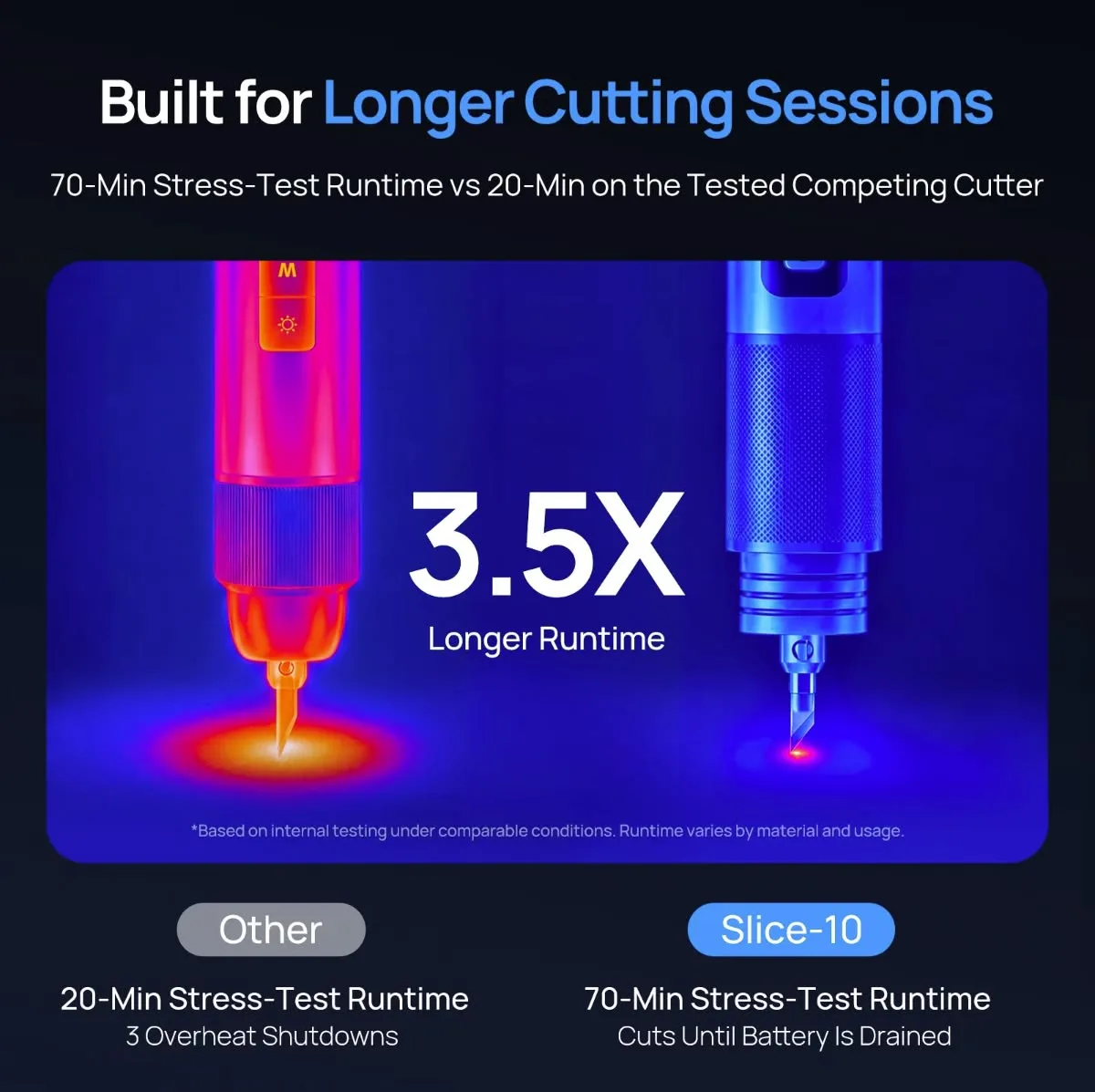
These numbers should be treated as manufacturer-provided test results, not guaranteed runtime figures.
The test was designed as a high-load stress scenario, and real-world battery life will change depending on several factors. Cutting thick or resistant material with high pressure will place more load on the cutter than lightly trimming thin foam or small PLA supports.
Runtime will also vary depending on power output, fan activity, material density, battery condition, cutting pressure, and cutting technique.
Still, the test provides some context for what SonicMax is trying to achieve. The Slice 10 is not being marketed only around peak cutting power. Its main selling point is maintaining usable performance for longer without repeatedly stopping because of heat.
Replaceable 5,000mAh Battery
The Slice 10 uses a replaceable 5,000mAh 21700 battery.
A removable battery makes sense for a tool intended for longer sessions. When one battery is depleted, the user can replace it instead of waiting for the entire tool to recharge.
This is especially useful for makers working on several models or prototypes in the same session. It also avoids one of the common problems with tools that use permanently installed batteries. Once the battery ages or loses capacity, the complete tool does not necessarily need to be replaced.
SonicMax says the battery can be swapped within seconds.
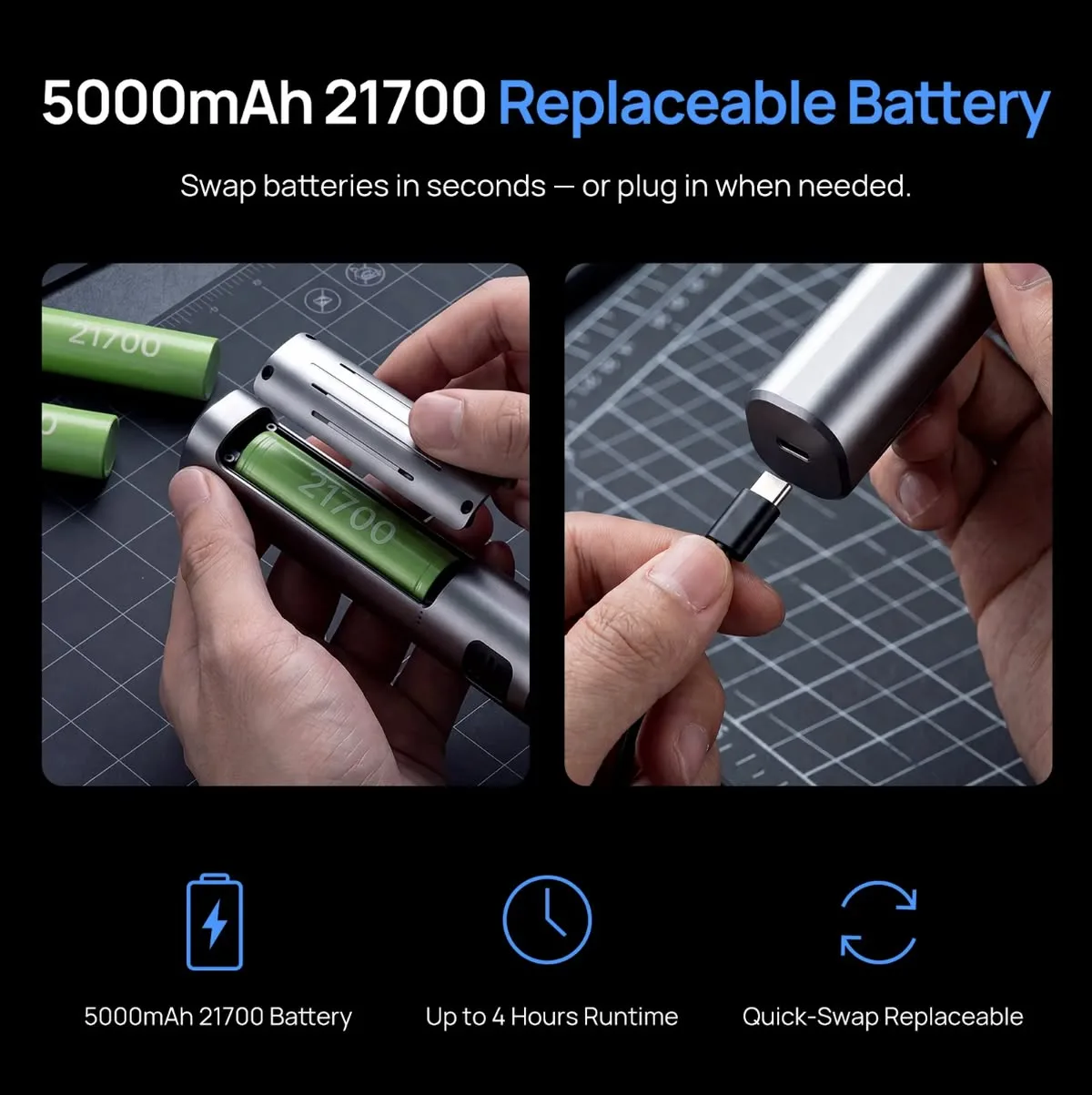
The cutter also supports USB-C fast charging and pass-through operation. This means it can continue running while connected to power when cordless operation is not necessary.
That gives the Slice 10 three practical operating options:
- Cordless use with the installed battery
- Longer cordless use with spare batteries
- Plugged-in use through USB-C
It is a sensible setup for a workshop tool, particularly for users who sometimes need portability but also spend long periods working at a desk.
Smart Material Auto-Detection
Another major feature is the Smart Material Auto-Detection system.
SonicMax says onboard sensing monitors feedback from the material, detects changes in cutting resistance, and automatically adjusts output power accordingly.
The system is designed to react when the cutter moves between materials or encounters a change in resistance. For example, a user might begin by cutting a lightweight PLA support structure and then reach a thicker section close to the main printed part.
Instead of requiring constant manual adjustment, the cutter changes its output automatically.
The OLED display shows the output and load response during use. Power adjustment is displayed in real time.
This could be particularly useful during 3D printing post-processing, where the shape and thickness of supports can vary considerably across the same model.
Automatic power adjustment should also make the tool easier to use for beginners. Rather than selecting a precise setting for every material, the user can allow the cutter to respond to resistance as the cut progresses.
Of course, automatic power control does not remove the need for careful handling. Users still need to understand the material they are cutting and avoid pushing the blade into areas that should remain untouched.
Lift-to-Activate Operation
The Slice 10 includes a lift-to-activate sensing system.
When the tool is lifted from a surface, it wakes and prepares for operation. When it is placed back down flat, the system powers down.
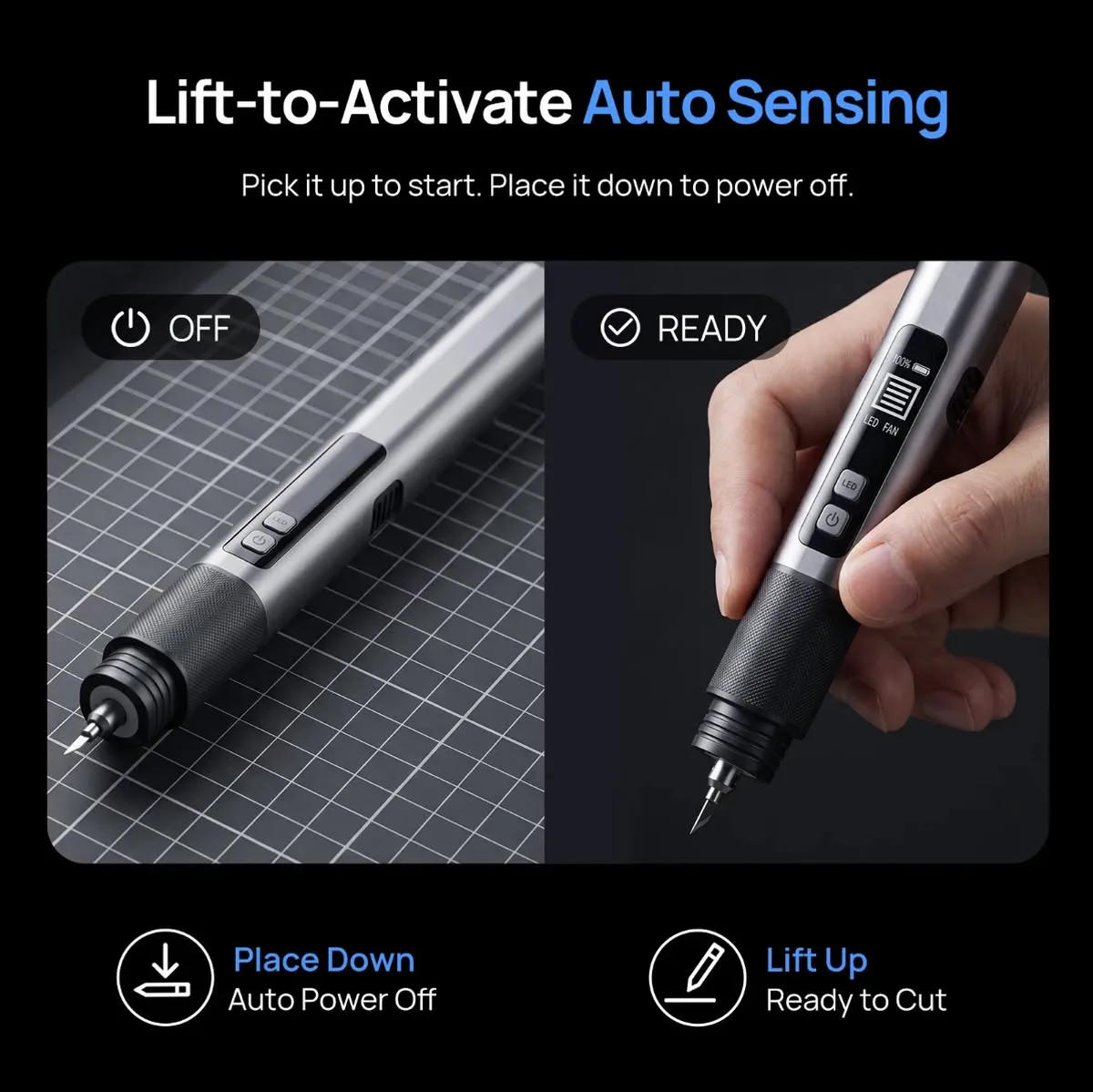
This feature is intended to reduce unnecessary vibration, battery use, and component wear. It also removes the need to manually power the cutter on and off every time the user pauses to reposition a part.
For detailed model work, these small interruptions happen often. A user might make one cut, place the tool down, rotate the model, inspect the next support, and then continue.
Automatically pausing when the cutter is placed down makes that workflow feel more natural.
Built-In OLED Display and LED Light
The Slice 10 includes an OLED status display that provides information about the current operating condition.
The screen can show:
- Remaining battery level
- Output power
- Working status
- Cooling fan status
- Protection alerts
- Load response
This is more useful than a simple battery indicator, especially on a cutter that automatically changes its output.
Users can see how the cutter is responding to the material instead of relying entirely on sound or feel.
A built-in LED work light is also positioned near the cutting area. This helps illuminate the blade and cut line when working on detailed parts or inside areas where overhead lighting does not reach particularly well.
It is a small feature, but one that can make a noticeable difference during precise cleanup work.
Using the Slice 10 for 3D Printing
SonicMax is positioning the Slice 10 as a post-processing tool for the 3D printing community.
Its intended applications include:
- Removing supports
- Cleaning up printed parts
- Trimming edges
- Cutting thin plastic sections
- Finishing resin prints
- Modifying prototypes
- Cutting foam and model board
The cutter is designed to work with materials such as PLA, PETG, ABS, resin parts, EVA foam, leather, model board, and plastic sheet.
Support removal is probably the most obvious use case.

Traditional flush cutters work well for many supports, but they can struggle in tight areas or leave small pieces attached to the model. Hobby knives provide more precision, although they require physical force and can slip when cutting harder plastic.
An ultrasonic cutter could provide another option for carefully trimming supports close to the model surface.
It may also be useful for resin prints, where supports can be thin but numerous. Controlled cutting could help users work around detailed surfaces without applying as much pressure to brittle parts.
For prototypes, the cutter could be used to modify openings, trim plastic panels, shape foam inserts, or clean up rough sections before assembly.
Material Limitations
The Slice 10 is not designed for every material.
SonicMax states that it is not intended for cutting:
- Metal
- Glass
- Ceramic
- Carbon fiber
- Thick epoxy materials
- Materials requiring industrial cutting equipment
That distinction is important.
An ultrasonic cutter can reduce cutting effort, but it does not turn a small cordless tool into an industrial saw. Users should stay within the supported material range and avoid forcing the blade through materials that are too hard or thick.
Cutting performance will also vary within the supported materials. A thin PLA wall and a thick ABS block may both be plastics, but they will place very different loads on the cutter.
Kickstarter Pricing and Availability
The SonicMax Slice 10 is planned to launch on Kickstarter on July 28th 2026.
The campaign will include several pricing tiers:
| Tier | Price | Availability |
|---|---|---|
| Super Early Bird | $99 | Limited to 200 units |
| Early Bird | $119 | Limited to 400 units |
| Kickstarter Special | $149 | Regular campaign price |
| Planned Retail Price | $215 | Expected MSRP |
Interested buyers can place a $1 reservation to join the priority launch list and receive a notification when the Kickstarter campaign begins.
However, SonicMax notes that the reservation does not guarantee access to one of the Early Bird reward tiers. Those tiers will be limited and offered on a first-come, first-served basis.
A Promising Approach to Cordless Ultrasonic Cutting
The Slice 10 is the first product from SonicMax, a company focused on bringing ultrasonic technology into tools designed for everyday creators.
Its approach is fairly straightforward. Instead of treating heat as an unavoidable limitation, SonicMax redesigned the cutter around efficiency, active cooling, and replaceable batteries.
The claimed 70-minute stress-test result is interesting, although independent testing will be needed to see how the cutter performs across different materials and real maker workflows.
Features such as automatic material detection, pass-through USB-C operation, lift-to-activate sensing, and the OLED display could also make the Slice 10 easier to use than a basic cordless cutter.
For 3D printing users, the most important question will be how much control it offers when removing supports and working close to finished surfaces. Cutting power is useful, but precision and heat control are just as important when one slip can damage a print that took 20 hours to complete.
On paper, the Slice 10 addresses several of the weaknesses commonly associated with compact cordless ultrasonic cutters. At a starting Kickstarter price of $99, it could be an interesting post-processing tool for makers who regularly work with printed plastic, foam, resin parts, and other lightweight materials.
The Kickstarter campaign is expected to launch on July 28th 2026.
Liked it?
|
|